
1-170 Columbia St. W

Modeling Tips

  • March 30, 2026

CALRoads View: Modeling Inert Gases

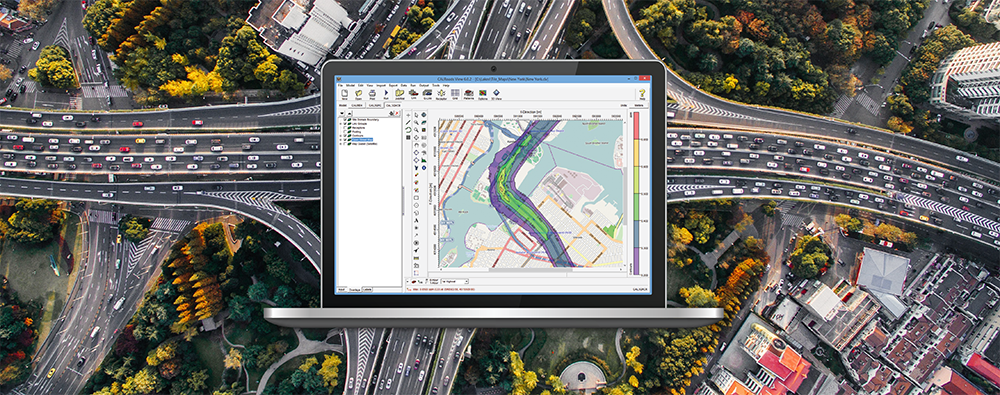
CALRoads View is an air dispersion modeling package used to predict air quality impacts near roadways from both moving and idling vehicles. Three dispersion models are integrated into the application: CALINE4, CAL3QHC, & CAL3QHCR. The original design of these models accounted only for releases of particulate matter (PM), carbon monoxide (CO), or nitrogen dioxide (NO2) with no further support for other inert gases.

  • February 24, 2026

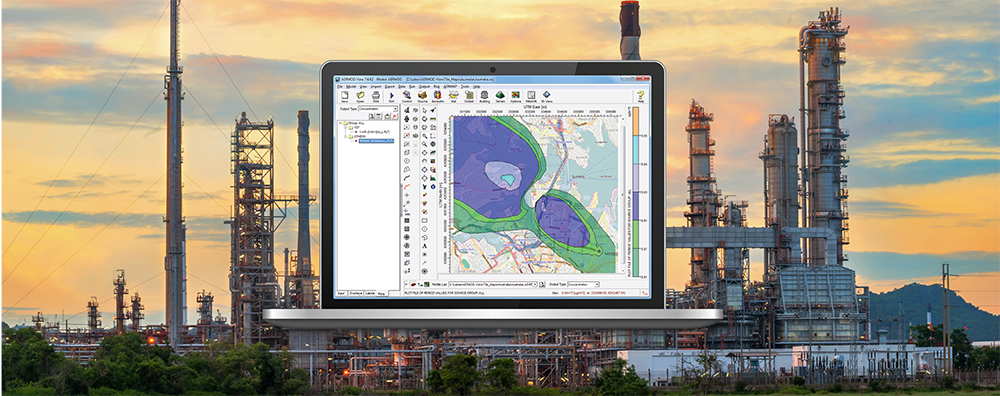
AERMOD View: When Numerical Values Are Outside AERMOD’s Default Threshold

A standard model run using the AERMOD air dispersion model produces numeric output with up to 13 significant figures (e.g., xxxxxxxx.xxxxx). Projects which use very low or very high emission rates may run into a problem where the values output by the model do not fit properly within this limit. For example, concentration values of 1E9 units or higher will result in a field of asterisks written to the output file as shown below.

  • January 20, 2026

AERMET Surface Data Changes

AERMET is the meteorological preprocessor used to prepare data into a format usable by the AERMOD modeling system. One of the four types of data ready by AERMET is hourly surface observations collected into one of several preformatted data file formats. For several years, the primary format used in AERMET’s Surface Pathway has been the Integrated Surface Hourly Database (ISHD) hosted by the National Centers for Environmental Information (NCEI).

  • December 11, 2025

AERMOD View: Time Series Output

The AERMOD model can produce many different forms of output to support modelers’ needs. For example, highest values (or ranked values) tables are probably the most common form of output. These tables contain concentrations which are not paired in time across the domain but ranked in order from highest to lowest at each individual receptor.

  • November 20, 2025

AERMOD View: EVENT Processing

When modeling with source groups in the AERMOD air dispersion model, it is not always obvious how much each source contributes to a calculated concentration. To facilitate source contribution analyses, AERMOD contains a routine called the EVENT model which can analyze user-specified events (e.g., design concentrations, threshold violations) and print each source’s contribution to the short-term (i.e., = 24 hours) event.

  • October 21, 2025

Lakes Software Products: Copying Projects

There are many reasons why it may be necessary to create a copy of a modeling project. You may want to make edits to a scenario without overwriting previous results, or you need to re-run the project using a different set of meteorological data while maintaining the rest of the inputs.